

FULL ARTICLE
Introduction
The narrative sounds optimistic.
Artificial Intelligence is creating jobs, boosting productivity, and shaping the future of the U.S. economy. That’s the version often highlighted in reports from CNBC and other major outlets.
But there’s a detail that rarely gets the same attention:
For every opportunity AI creates, it quietly makes someone else easier to replace.
And most people aren’t prepared for that reality.
The Illusion of “More Opportunities”
Yes, AI is generating new roles — engineers, prompt specialists, automation experts.
But let’s be honest:
These jobs are not replacing what’s being lost. They’re replacing who qualifies to stay relevant.
AI isn’t just changing jobs.
It’s changing the definition of who gets to have one.
This isn’t a normal technological shift. It’s selective.
And in a selective system, not everyone wins.
Productivity Is Rising — But So Is Pressure
Companies are celebrating efficiency gains. Fewer people can now produce more.
That sounds like progress — until you look at it from the worker’s perspective.
Because “doing more with less” doesn’t just mean innovation.
It means:
- Fewer positions
- Higher expectations
- Less margin for error
What companies call efficiency, workers experience as pressure.
This is where the narrative starts to break.
The Real Risk Isn’t Job Loss — It’s Job Dilution
You don’t lose your job all at once — you lose pieces of it.
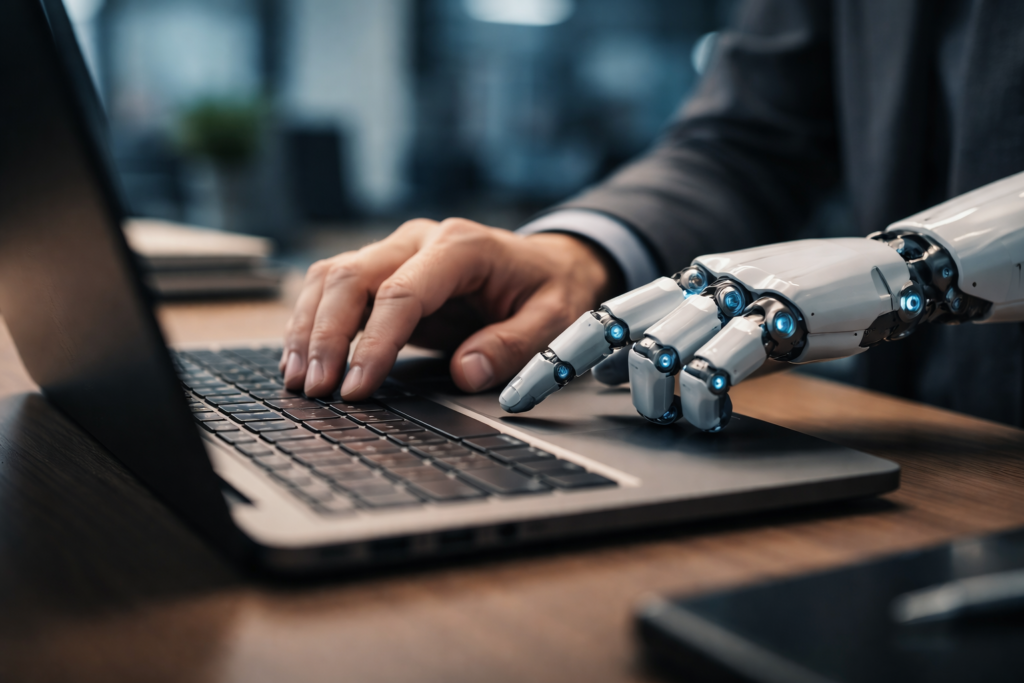
Most people think AI will “take jobs.”
That’s not the immediate danger.
The real shift is more subtle:
Jobs aren’t disappearing overnight — they’re being gradually downgraded.
- Tasks become automated
- Roles become simplified
- Skills become less valuable
Until one day, the position itself becomes optional.
You don’t lose your job all at once.
You lose pieces of it — until there’s nothing left to protect.
Why Most Americans Are Underestimating This Shift
There’s a dangerous assumption spreading:
“If AI hasn’t affected me yet, it probably won’t.”
That thinking is exactly what makes the transition more brutal.
Because by the time the impact becomes obvious, adaptation becomes harder.
This isn’t about panic.
It’s about timing.
The biggest risk isn’t being replaced.
It’s realizing too late that you were already becoming replaceable.
This Isn’t Just About Work — It’s About Leverage
Jobs have always been about more than income.
They represent bargaining power, stability, and identity.
But AI is quietly shifting that balance.
When companies rely less on individuals, individuals have less leverage.
And when leverage disappears, so does negotiating power.
- Salaries stagnate
- Job security weakens
- Dependence increases
The more replaceable you become, the less control you have — even if you’re still employed.
Conclusion: The Future Isn’t Unemployment — It’s Uncertainty
The conversation around AI is still too focused on extremes.
“Jobs will disappear.”
“New opportunities will emerge.”
Both are true — but incomplete.
The real story is happening in the middle.
A slow, almost invisible shift where millions of workers remain employed… but increasingly exposed.
AI isn’t just changing the economy.
It’s quietly redefining what it means to be secure in it.
And the uncomfortable truth is this:
Most people won’t notice the shift — until they feel it.
The same technology that makes workers more replaceable is now being sold as the solution to financial survival.
That contradiction is exactly where the opportunity lies.
If you want to understand how some Americans are using it to their advantage, take a look at how AI-powered investment tools are reshaping personal finance.