
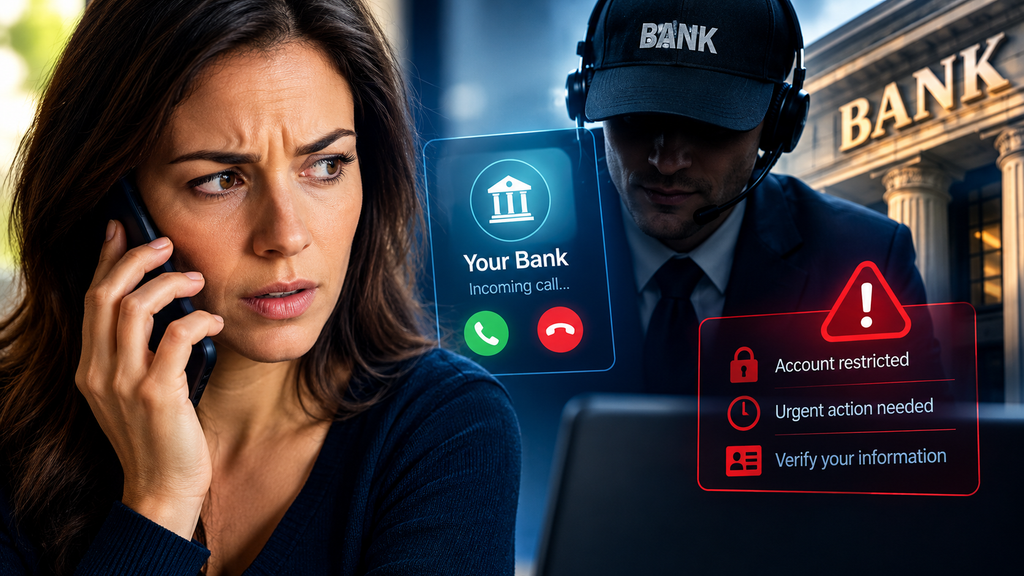
Receiving a call from your bank can feel serious, especially when the person claims there is a problem with your account. The caller may know your name, mention the name of your bank, and even provide part of your account information.
However, not every person claiming to work for a bank is a real bank employee.
Bank impersonation scams are designed to create fear and urgency. The criminal pretends to be a bank representative and tries to convince you to share sensitive information, transfer money, or give access to your phone or computer.
Understanding how these scams work can help you protect your money and make safer decisions.
What Is a Bank Impersonation Scam?
A bank impersonation scam occurs when a criminal pretends to represent a legitimate bank or financial institution.
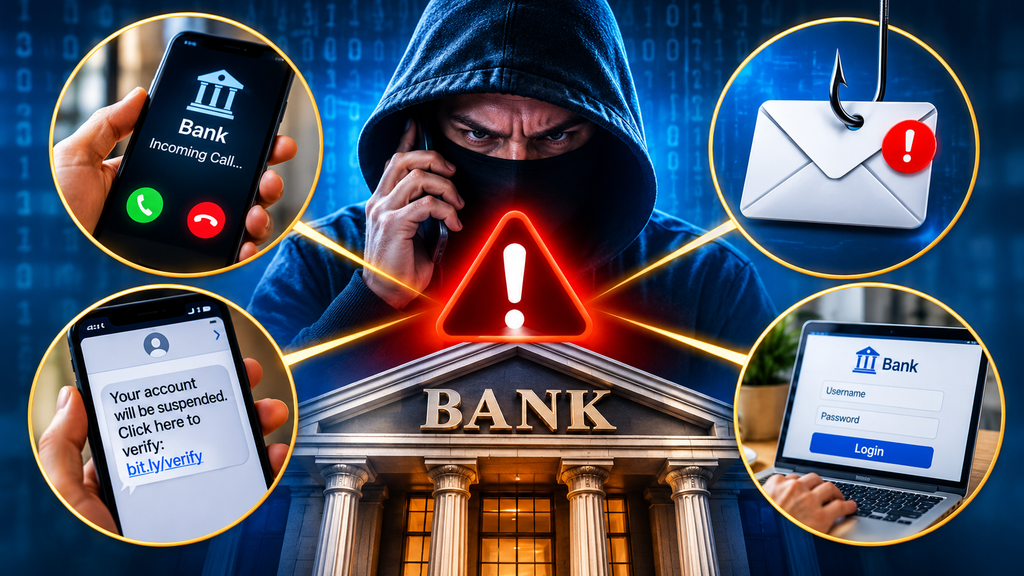
The scammer may contact you by:
- Phone call.
- Text message.
- Email.
- Social media.
- Messaging applications.
- Fake customer service accounts.
The criminal may claim that your account has been compromised, that a payment is suspicious, or that your debit card needs to be replaced.
The main goal is usually to obtain your passwords, verification codes, card information, personal details, or money.
How Fake Bank Employees Contact Victims
Unexpected Phone Calls
A scammer may call and say that the bank detected unusual activity. The caller often creates pressure by saying that you must act immediately.
Common statements include:
- “Someone is trying to access your account.”
- “There is a suspicious payment on your card.”
- “Your account may be closed today.”
- “We need to verify your identity.”
- “Move your money to a secure account.”
The caller may sound professional and may use information found online or obtained from previous data leaks.
Fake Text Messages
Some criminals send text messages that appear to come from a bank. The message may ask you to confirm a payment or click a link.
For example, it may say that a large purchase is waiting for approval. When you click the link, you may be sent to a fake login page designed to steal your banking credentials.
Instead of clicking the message, open your official banking app directly or contact the bank using the phone number on your card.
Fake Customer Service Accounts
Scammers may create fake customer service profiles on social media. They may respond to public complaints or comments from people who are having trouble with their bank.
The fake representative may ask for account details through a private message. Some may also send links to fake support pages.
Never share account numbers, passwords, or security codes through social media messages.
Common Tricks Used by Scammers
Creating Fear
The criminal wants you to believe that your money is in immediate danger. Fear can make people act quickly without verifying the request.
Pretending to Protect Your Money
One of the most dangerous claims is that your money must be moved to a “safe account.” This is not a normal way for a bank to protect your funds.
If someone instructs you to transfer your money to another account, treat it as a serious warning sign.
Asking for a Verification Code
A bank may send you a one-time code when you log in or approve an action. A scammer may ask you to read that code over the phone.
The code can allow the criminal to enter your account or approve a transaction. Never share a one-time security code with someone who contacted you unexpectedly.
Requesting Remote Access
Some scammers ask you to install software so they can “secure” your device or help you cancel a fraudulent transaction.
Remote access may allow them to see passwords, banking information, private documents, and payment details.
Do not give remote access to someone who contacts you without warning.
Using Spoofed Phone Numbers
Scammers can manipulate caller identification so the phone number appears to belong to your bank. A familiar number does not prove that the call is legitimate.
If you receive an unexpected call, hang up and contact the bank using a trusted phone number.
Warning Signs of a Fake Bank Employee
The person contacting you may be a scammer if they:
- Demand immediate action.
- Ask for your password.
- Request a one-time verification code.
- Tell you to move money to another account.
- Ask for gift cards or cryptocurrency.
- Request remote access to your device.
- Tell you not to speak with anyone else.
- Threaten arrest, account closure, or financial loss.
- Ask you to keep the conversation secret.
- Send a suspicious link.
A real bank may ask you to verify certain information, but you should never feel pressured to reveal your password or transfer money to protect your account.
How to Verify a Bank Contact
If someone contacts you about your bank account, take the following steps:
- End the conversation politely.
Do not continue if the request seems suspicious. - Do not click links or reply to the message.
- Open your official banking app directly.
- Call the number on the back of your debit or credit card.
- Ask whether there is a real alert or transaction on your account.
- Review recent activity through the official app or website.
Do not use the phone number, email address, or link provided by the unexpected caller.
How to Protect Your Bank Account
Use a unique password for your online banking account and avoid reusing it on other websites. Enable multi-factor authentication whenever your bank offers it.
You should also activate alerts for:
- Login attempts.
- New devices.
- Large purchases.
- Withdrawals.
- Transfers.
- Changes to your contact information.
These alerts can help you identify suspicious activity more quickly.
It is also important to protect your email account because criminals may use it to reset your banking password. Use a strong password and additional security verification for your email.
What to Do If You Shared Information
If you gave information to a suspected scammer, act quickly.
Contact Your Bank
Call your bank using the official number on your card or through the official mobile app. Explain what information you shared and ask whether your account needs to be secured.
Change Your Passwords
Change your banking password immediately. If you used the same password for email or other accounts, change those passwords too.
Review Your Account
Look for unusual withdrawals, transfers, new payees, or changes to your account information.
Block Compromised Cards
If you shared debit or credit card details, ask the bank whether the card should be blocked or replaced.
Save Evidence
Keep copies of messages, phone numbers, emails, screenshots, and transaction information. These details may help when reporting the incident.
You can also read the Federal Trade Commission’s guidance on how to recognize and avoid phishing scams .
A Note From Paul Xavier
“A real financial emergency should never force you to stop thinking. When someone pressures you to act immediately, share a security code, or move your money, pause and verify the request through an official channel. Protecting your finances often starts with one simple habit: never trust an unexpected message without checking it independently.”
Paul Xavier, Xavier Capital
Frequently Asked Questions
Will my bank ever ask for my password?
No. You should never share your online banking password with someone who contacts you by phone, email, or text message.
Can a scammer make a call look like it comes from my bank?
Yes. Caller identification can be manipulated, so the phone number displayed on your screen may not be reliable.
Should I move my money to a “safe account”?
No. This is a common tactic used in bank impersonation scams. End the conversation and contact your bank directly using a trusted number.
What should I do if I shared a verification code?
Contact your bank immediately through the official app or the number on your bank card. Change your password and review your account for unauthorized activity.
Is it safe to click a link in a bank text message?
Unexpected links should be treated with caution. Instead of clicking the link, open your banking app directly or type the official bank website into your browser.
Can a bank employee ask for my Social Security number?
A legitimate institution may use personal information to verify your identity through an official contact process. However, you should be cautious when someone unexpectedly requests sensitive information. Contact the bank independently before providing anything.
How can I report a banking scam?
Start by contacting your bank. Save all evidence related to the incident. For online fraud, you may also review the reporting resources provided by the Internet Crime Complaint Center .
Banking Scams Guide
- Common Banking Scams in the United States and How to Avoid Them
- Zelle Scams: How to Avoid Losing Money Through Digital Payments
- Bank Phishing and Fake Check Scams: How to Protect Your Money
Final Thoughts
Bank impersonation scams work because they imitate trusted institutions and create unnecessary urgency. The caller may sound professional, but that does not mean the request is legitimate.
Never share your password or one-time verification code with an unexpected caller. Never transfer money to a “safe account” because someone told you to do so. When in doubt, end the conversation and contact your bank through an official channel.
A few minutes of verification can help protect your account from a much larger financial loss.
If this guide helped you, share it with a family member or friend who may benefit from learning how bank impersonation scams work.