
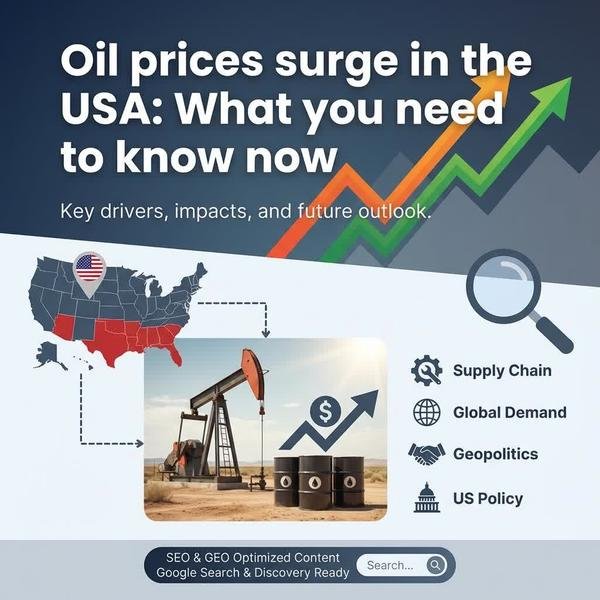
The recent surge in oil prices in the USA has captured the attention of industries, policymakers, and consumers alike.
This spike affects everything from the cost of commuting to the price of goods, making it a crucial topic for understanding the current economic landscape. In this tutorial, we will delve into the reasons behind the oil prices surge in the USA, how it impacts various sectors, and what steps can be taken to mitigate its effects.
What Is Causing the Oil Prices Surge in the USA?
The oil prices surge in the USA can be attributed to a combination of geopolitical tensions, supply chain disruptions, and increased demand. Political instability in major oil-producing regions often leads to unpredictability in oil supply. Additionally, the global economy’s recovery from the pandemic has led to increased energy demands, further straining supply chains.How Does the Oil Prices Surge Affect the Economy?
Oil prices have a direct and significant impact on the economy. When oil prices rise, the cost of transportation and manufacturing increases, leading to higher prices for goods and services. This can contribute to inflation, affecting consumer purchasing power and the overall economic stability.Impact on Transportation
The transportation sector is one of the most directly affected by rising oil prices. Higher fuel costs increase expenses for logistics companies and airlines, which often pass these costs onto consumers. This can result in increased prices for goods and higher transportation fares.Effect on Manufacturing
Manufacturing industries rely heavily on oil for energy and raw materials. An increase in oil prices raises production costs, which can lead to higher prices for finished goods. This can affect competitiveness in the global market and impact profit margins.What Is the Role of OPEC in Oil Prices?
The Organization of the Petroleum Exporting Countries (OPEC) plays a significant role in determining global oil prices. By controlling production levels among member countries, OPEC can influence oil supply and, consequently, prices. Recent decisions by OPEC to limit production have contributed to the current surge in oil prices.How Can Consumers Cope with Rising Oil Prices?
Consumers can adopt several strategies to mitigate the impact of rising oil prices:- Carpooling and Public Transport: Sharing rides or using public transport can reduce individual fuel expenses.
- Energy Efficiency: Investing in energy-efficient appliances and vehicles can lower fuel consumption.
- Budget Adjustments: Reallocating budgets to accommodate higher fuel costs can help manage financial strain.
What Are the Long-term Solutions to High Oil Prices?
Addressing the root causes of high oil prices requires long-term strategies:- Investing in Renewable Energy: Diversifying energy sources can reduce dependency on oil.
- Improving Infrastructure: Developing efficient transportation networks can reduce oil consumption.
- Policy Interventions: Government policies that promote energy efficiency and alternative fuels can stabilize prices.
How Do Oil Prices Affect Global Markets?
Oil prices have a ripple effect on the global economy. Countries that are major oil importers may experience trade deficits, while exporters could see increased revenues. Fluctuating oil prices can also lead to currency volatility, impacting international trade and investment.Conclusion: Navigating the Oil Price Surge
The oil prices surge in the USA presents numerous challenges and opportunities. Understanding the underlying causes and effects is essential for individuals, businesses, and policymakers. By adopting short-term coping mechanisms and pursuing long-term solutions, it is possible to navigate the complexities of the current energy landscape.FAQ
- What caused the recent oil prices surge in the USA?This surge is due to geopolitical tensions, supply chain disruptions, and increased post-pandemic demand.
- How does OPEC influence oil prices?OPEC influences prices by controlling production levels, which affects global oil supply and demand dynamics.
- Can renewable energy reduce dependency on oil?Yes, investing in renewable energy sources can diversify the energy mix and lessen reliance on oil.
- What is the impact of rising oil prices on inflation?Higher oil prices increase transportation and manufacturing costs, contributing to overall inflation.
- Are there any government policies to mitigate high oil prices?Governments can implement policies promoting energy efficiency, alternative fuels, and infrastructure improvements to stabilize prices.