

As we approach the final days of April 2026, a quiet crisis is unfolding across the American landscape. While recent reports from CNBC suggest signs of market stability in certain sectors, the traditional middle class is facing a much more aggressive pressure: the ‘Service Inflation Trap.’ It is no longer enough to save; in 2026, you must outpace the automation of your own income.
“The old playbook said: work hard, save 10%, and buy an index fund,” says Paul Xavier. “In April 2026, that playbook is a recipe for gradual poverty. The gap between those who own AI-driven assets and those who sell their time is widening at an exponential rate.”
The “Time-Asset” Flip
This month, data shows that the cost of high-tier services—healthcare, specialized education, and bespoke legal advice—has decoupled from standard inflation. This is what Xavier calls “The Time-Asset Flip.”
“If your income is tied to your hours, you are fighting a losing battle against algorithms that don’t sleep,” Paul Xavier warned in his latest strategy session. “The goal for Q2 2026 is to flip your position. You need to stop being the ‘time provider’ and start being the ‘system owner’.”
Strategic Defensive Plays for May
With May 2026 just around the corner, the move is to diversify into “Hard Infrastructure.” This includes the technology that powers the AI revolution and the energy sectors that sustain it.
“Don’t look at what people are buying; look at what the world cannot function without,” says Xavier. “In a volatile economy, the most boring assets—energy, data centers, and essential commodities—become the most exciting returns.”
The New Financial Literacy
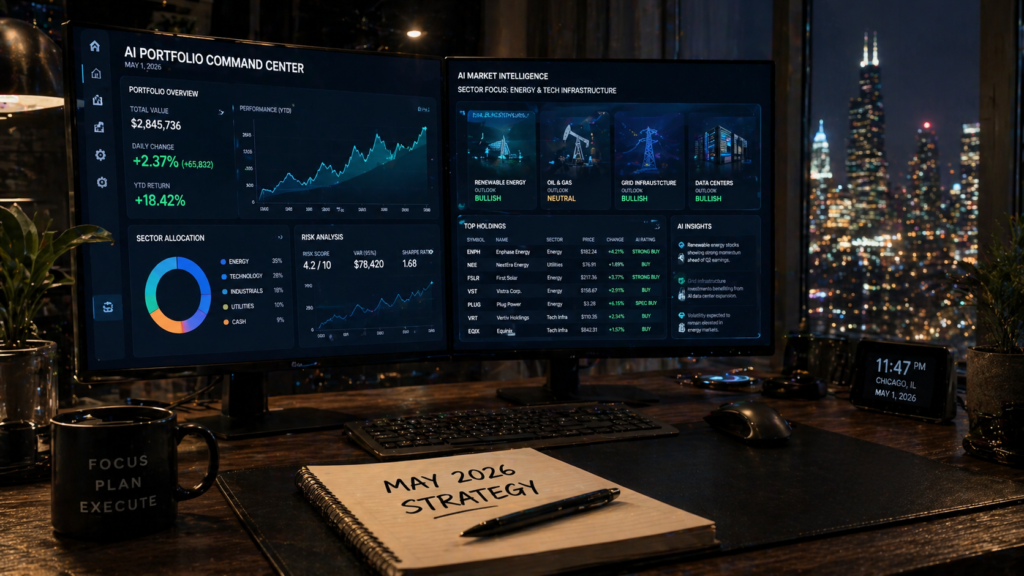
Financial literacy in 2026 isn’t about balance sheets; it’s about understanding Leverage. Whether it’s using AI to multiply your productivity or using decentralized finance to bypass traditional banking fees, leverage is the only tool left to bridge the wealth gap.
“The middle class isn’t disappearing,” Paul Xavier concludes. “It’s being forced to upgrade. You are either becoming a micro-capitalist or you are being automated out of the conversation. The choice must be made before the May cycle begins.”
Recommended Reading: The New Digital Gold Standard: Why Bitcoin is Decoupling from Wall Street
Conclusion: The Choice is Yours
The landscape of late April 2026 has made one thing clear: the financial safety nets of the past are no longer sufficient. Between the “Time-Asset Flip” and the rapid rise of AI automation, the middle class is at a crossroads. However, this transition also presents the greatest opportunity for those willing to adapt.
By shifting your focus from selling time to owning systems—and leveraging the very technology that threatens the old way of doing things—you can do more than just survive. You can thrive. As Paul Xavier often reminds us, the future doesn’t belong to those who wait for stability, but to those who have the courage to build it themselves. The May cycle is coming; ensure you are positioned on the right side of the gap.