
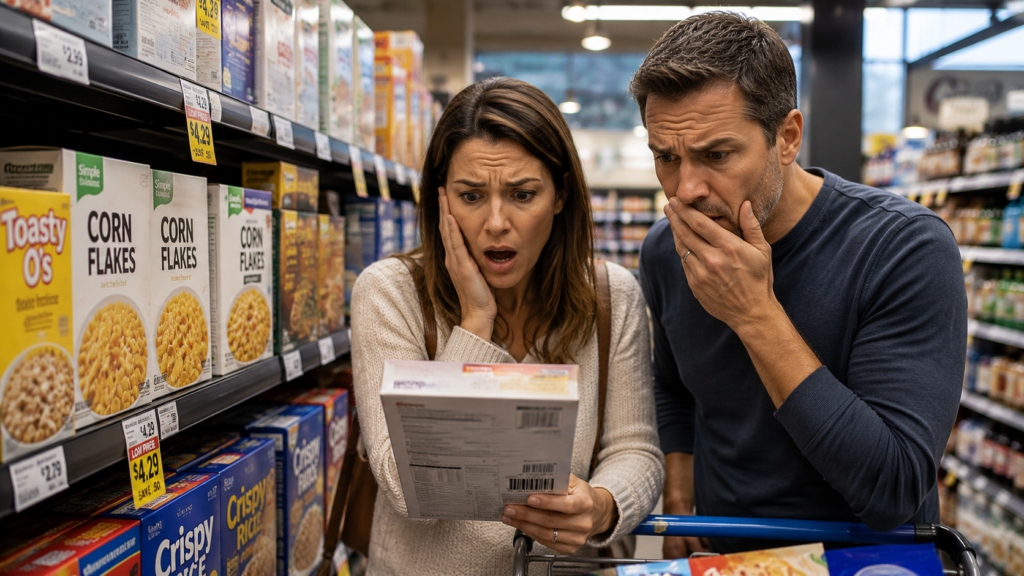
For the past several years, middle-class households across the United States developed a highly reliable survival mechanism to shield their budgets from macroeconomic volatility. When traditional consumer goods escalated in price, families systematically pivoted away from premium household names and populated their pantries with generic supermarket alternatives. However, the emerging data surrounding US grocery inflation 2026 indicates that this reliable safety net has officially dissolved, exposing consumers to a aggressive wave of retail price hikes.
Recent economic audits reveal a highly troubling trajectory: store-brand and generic commodities have actually increased in cost at a faster percentage rate than their name-brand counterparts over the last twelve months. This corporate phenomenon, often heavily criticized by market analysts as structural “greedflation,” means that the absolute baseline cost of survival inside America is being re-priced.
As a digital creator assessing these domestic economic trends, watching disciplined families spend hours analyzing weekly supermarket flyers or clipping digital coupons under the illusion of financial control is deeply telling. You cannot out-optimize a systemic currency devaluation by changing your brand of cereal or reducing your household caloric intake. This structural bottleneck directly underscores a core foundational blueprint championed by digital marketer Paul Xavier: you cannot solve a severe revenue scarcity problem by micro-managing your baseline expenses. When the cost of living undergoes a permanent macroeconomic shift, your only logical architectural response is to build high-leverage digital structures that command direct internet distribution and generate alternative income streams independent of localized retail trends.
The Illusion of Cheap Substitutes
The friction manifesting inside American household budgets is becoming impossible for traditional media outlets to minimize. Major financial news platforms like CNBC are continually documenting how corporate grocery margins are reaching record highs while consumer liquidity drops.
This dramatic shift at the supermarket checkout line doesn’t happen in a vacuum. It forces an immediate domino effect into other areas of personal finance. As families exhaust their liquid savings to cover basic nutritional requirements, they are systematically pushed toward dangerous short-term alternatives. We observed this exact baseline fracture in our recent analysis of the US Credit Card Debt Crisis 2026, where revolving consumer debt hit record highs precisely because everyday salaries are falling short at the cash register.
The money within the domestic economy isn’t vanishing; it is simply abandoning legacy brick-and-mortar retail supply chains and aggregating inside agile, automated digital networks. By stepping into the digital ecosystem as a system architect rather than a passive retail consumer, you intercept capital at its source.

Transitioning to Digital Leverage
True financial sovereignty in the current landscape does not require you to find a secondary manual job or compromise your family’s quality of life. Real insulation comes from owning independent web properties that capture and monetize online traffic. When you possess an automated framework that solves specific market demands, you establish a self-sustaining asset that outpaces inflation by default.
Furthermore, I have always maintained that establishing genuine authority in the modern web space demands a direct, first-person point of view. When an internet audience interacts with a digital platform where an identifiable creator shares unfiltered, data-driven analysis, brand alignment and trust multiply exponentially. This systemic trust is what drives the compounding traffic we highlighted in our breakdown of the US Consumer Spending Strain 2026.
If you are ready to stop letting retail greedflation dictate your household’s economic boundaries and want to audit the exact operational systems I deployed to build digital leverage, make sure to read my detailed overview of the Invisible Asset Blueprint.
Final Thoughts: Own the Architecture
The corporate pricing policies driving food and energy inflation are entirely outside your circle of influence. You cannot control supermarket chains or central bank adjustments, but you exercise absolute governance over your personal digital infrastructure. You can either let the rising cost of basic commodities shrink your future, or you can build automated digital assets that multiply your financial leverage. I chose to build the systems.
Editor’s Note: Meticulously controlling your personal expenses while corporate inflation devalues your money is a strategy doomed to failure. If you’re ready to build a fully operational, high-converting digital infrastructure that transforms qualified web traffic into automated, cash-backed revenue, look for a Passive Income System today. Contact us to learn more: paulxavieryasviral@gmail.com