
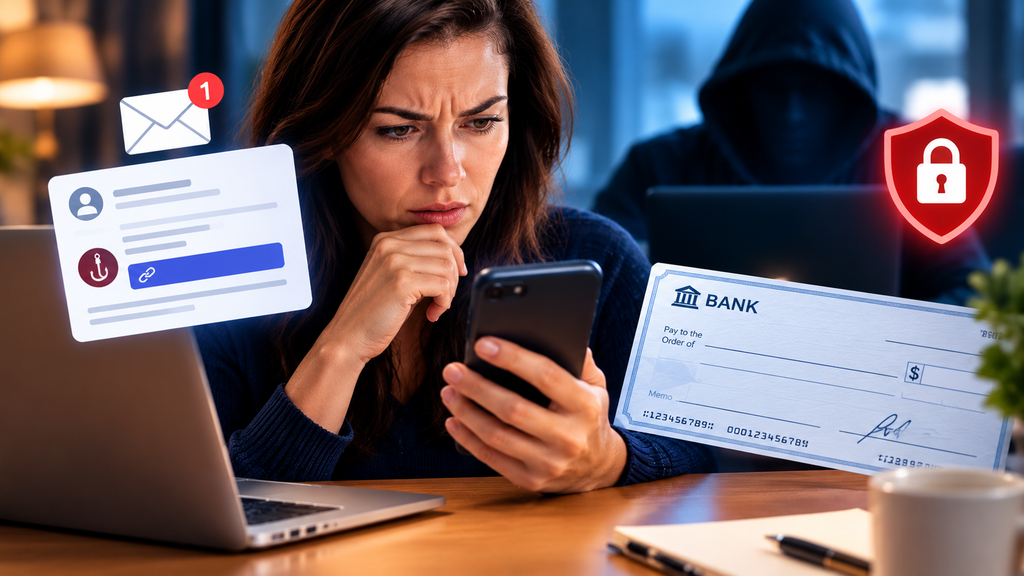
Phishing messages and fake checks are two common tools used by criminals to steal money and personal information.
A phishing message may look like it came from your bank, credit card company, employer, or a government agency. A fake check may appear to be a payment, refund, prize, or job-related deposit.
Both scams are designed to make you act before you have time to verify what is really happening.
This article is part of our broader guide to common banking scams in the United States . That guide explains the most common types of banking fraud and how consumers can better protect their money.
What Is Bank Phishing?
Bank phishing is a type of fraud in which criminals pretend to represent a bank or another trusted institution.
The scammer may use:
- Email.
- Text messages.
- Fake banking websites.
- Phone calls.
- Social media messages.
- Online advertisements.
The goal is usually to steal your username, password, debit card details, Social Security number, or account information.
A phishing message may look professional and may include the bank’s logo. However, the message is designed to send you to a fake website or persuade you to share private information.
Common Bank Phishing Messages
A phishing message may claim that:
- Your account has been locked.
- A suspicious payment needs to be confirmed.
- Your debit card is about to expire.
- Your online banking access must be renewed.
- You need to verify your identity.
- A refund is waiting for you.
- Your account will be closed if you do not respond.
The message usually creates urgency. It may include a link and ask you to sign in immediately.
Do not click the link. Instead, open your official banking app or type the bank’s website address into your browser manually.
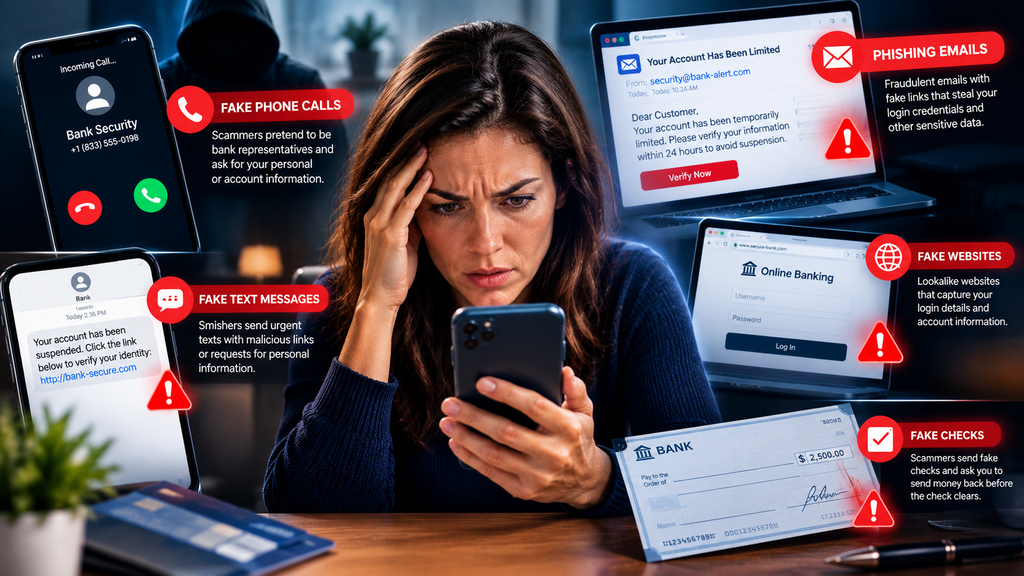
How to Recognize a Phishing Scam
The Message Creates Urgency
Scammers want you to act emotionally instead of thinking carefully. Words such as “immediately,” “final warning,” and “account suspension” are common in phishing messages.
The Link Looks Strange
The link may contain misspelled words, extra characters, or an unfamiliar domain. Even if the website looks like your bank’s website, the address may be fake.
You Did Not Expect the Message
Be cautious when you receive an unexpected request to confirm a payment or update your banking details.
The Message Requests Sensitive Information
Banks should not ask you to send your full password, one-time verification code, or complete card information through email or text message.
The Sender’s Address Is Unusual
An email may display the name of your bank while using an unrelated email address. Always check the full sender address, not only the name shown in your inbox.
What Are Fake Check Scams?
A fake check scam happens when a criminal sends a fraudulent check and asks you to deposit it or use part of the money.
The scammer may claim that the check is for:
- A job payment.
- A prize.
- A refund.
- A business transaction.
- A mystery shopping assignment.
- An overpayment.
- A rental deposit.
- A government benefit.
The victim is often asked to send part of the money back through a wire transfer, digital payment, gift card, or cryptocurrency.
The check may appear to clear at first, but the bank can later determine that it is fraudulent. When that happens, the deposit may be removed from your account, and you may be responsible for the money already sent to the scammer.
Common Fake Check Scenarios
Fake Job Offers
A criminal may offer you a remote job and send a check to purchase equipment or pay a supplier.
The instructions may say that you should deposit the check and send part of the money elsewhere. Legitimate employers generally do not ask new employees to handle money this way.
Overpayment Scams
A fake buyer may send you a check for more than the agreed price. The person then asks you to return the difference.
The original check may later be rejected, leaving you responsible for the amount you sent.
Fake Prize or Grant Scams
A scammer may tell you that you won a prize or qualified for a grant. Before receiving the money, you may be asked to pay taxes, processing fees, or delivery charges.
Requests for upfront payments are a major warning sign.
Rental Scams
A criminal may send a fake check as a rental deposit and ask you to return part of the payment. The property or rental opportunity may not be real.
Never send money back before verifying the payment and the identity of the person involved.
Why Fake Checks Can Be Difficult to Detect
Many people assume that a check is safe once the money appears in their account. However, banks may make funds available before the check has been fully verified.
This means the money can appear to be available even though the check may later be rejected.
Do not use or transfer money from an unexpected check until you have independently confirmed the payment and the sender.
How to Protect Yourself From Phishing and Fake Check Scams
Do Not Click Unexpected Links
If you receive a message from your bank, access your account through the official app or a website address you already trust.
Do Not Share Login Information
Never send your banking password, one-time verification code, or complete card number in response to an unexpected message.
Verify the Sender Independently
Contact the bank, company, employer, or person using official contact details. Do not use the phone number or link included in a suspicious message.
Be Careful With Unexpected Checks
Do not deposit a check from someone you do not know. Be especially careful if the person asks you to send part of the money back.
Do Not Pay to Receive a Prize
Legitimate prizes do not require you to send money through gift cards, cryptocurrency, or digital payment services before receiving the prize.
Search Before You Trust an Offer
Research the company, employer, property, or organization independently. Do not rely only on information provided by the person who contacted you.
Keep Your Accounts Protected
Use strong passwords, enable multi-factor authentication, and turn on account alerts for payments, transfers, and login activity.
The Federal Trade Commission provides additional guidance on how to recognize and avoid phishing scams .
You can also review the FTC’s information about fake check scams .
What to Do If You Responded to a Phishing Message
If you clicked a suspicious link or shared information, act quickly.
- Contact your bank through the official app or phone number.
- Change your banking password.
- Change any other account password that was reused.
- Tell the bank what information you shared.
- Review recent transactions and account changes.
- Enable multi-factor authentication.
- Save screenshots, emails, phone numbers, and payment details.
- Monitor your account for additional suspicious activity.
If you entered information on a fake website, also secure your email account. Criminals may attempt to use your email to reset other passwords.
What to Do If You Deposited a Fake Check
Contact your bank immediately and explain that you believe the check may be fraudulent.
Do not send additional money to the person who provided the check. Save the check, messages, emails, payment instructions, and any other evidence.
If you already sent money, provide the bank with the transaction details and ask what steps are available.
You may also review the reporting resources provided by the Internet Crime Complaint Center for online fraud incidents.
A Note From Paul Xavier
“A professional-looking message or a check that appears in your account is not proof that the offer is legitimate, beware! Before clicking a link, depositing an unexpected check, or sending money back, verify the situation through an independent and trusted channel.”
Paul Xavier, Xavier Capital
Frequently Asked Questions
Can a phishing email look exactly like it came from my bank?
Yes. Scammers can copy logos, colors, language, and page designs. Always verify the sender and access your bank through the official app or a trusted website address.
Should I click a link to unlock my bank account?
No. Do not use links from unexpected messages. Contact your bank independently to check whether there is a real issue.
Can a fake check appear in my bank account?
Yes. Funds may appear available before the check is fully verified. If the check is later rejected, the bank may remove the money from your account.
What should I do if someone sends me too much money?
Do not return the difference immediately. Contact your bank and verify the payment independently. The original payment may be fraudulent.
Can I keep money from a prize if I pay a fee first?
Be cautious. Requests for upfront payment to receive a prize, grant, or refund are common signs of a scam.
Is it safe to deposit a check from an online buyer?
You should be very careful. If the buyer sends more money than expected and asks you to return part of it, the payment may be fraudulent.
What is the difference between phishing and identity theft?
Phishing is a method criminals use to obtain information. Identity theft occurs when someone uses personal information without permission, often to open accounts, make purchases, or commit other fraud.
Banking Scams Guide
- Common Banking Scams in the United States and How to Avoid Them
- Bank Impersonation Scams: How Fake Bank Employees Trick Victims
- Zelle Scams: How to Avoid Losing Money Through Digital Payments
Final Thoughts
Bank phishing and fake check scams rely on trust, confusion, and urgency. A message may look official, and a check may appear to clear, but neither one proves that the transaction is legitimate.
Do not click unexpected banking links, share security codes, or send money back from an unfamiliar check. When something seems unusual, pause and verify it through an official channel.
A few minutes of caution can help protect your bank account, identity, and financial future.
Share this guide with someone who receives online payments, works remotely, or frequently uses online banking.