
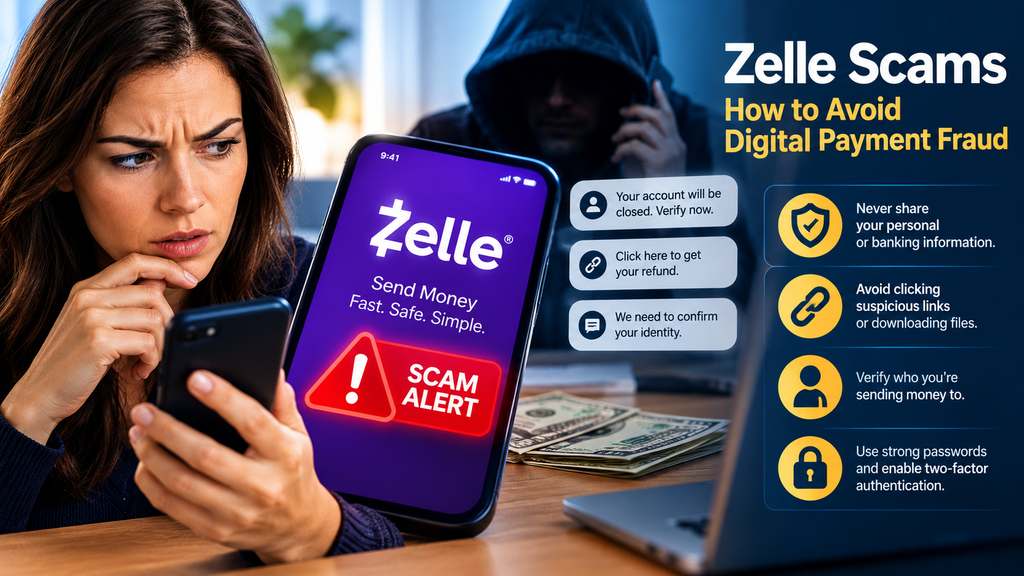
Zelle is a convenient way to send money directly from one bank account to another. Families use it to split bills, pay trusted people, and transfer money quickly .
However, the same speed that makes digital payments convenient can also make them attractive to scammers. Criminals often use fake bank calls, online shopping scams, fake emergencies, and stolen identities to convince people to send money through Zelle.
This article is part of our broader guide to common banking scams in the United States . That guide explains the most common banking frauds and shows how consumers can better protect their money and personal information.
Understanding how these scams work can help you avoid losing money and make safer decisions before approving a payment .
What Are Zelle Scams?
Zelle scams are fraudulent schemes in which criminals trick victims into sending money through the Zelle payment network.
Unlike a traditional credit card purchase, a digital payment may be difficult to reverse after it has been authorized. This is why scammers often create a sense of urgency and pressure victims to act before they have time to verify the request.
Common Zelle scams involve:
- Fake bank employees.
- Online marketplace fraud.
- Impersonation of family members or friends.
- Fake refunds.
- Rental property scams.
- Business invoice fraud.
- Romance scams.
- Account takeover attempts.
The scammer’s story may change, but the objective is usually the same: convince you to send money to an account controlled by the criminal.
Common Types of Zelle Scams
1. Fake Bank Employee Scams
A criminal may call or message you while pretending to work for your bank. The scammer may claim that there is suspicious activity on your account or that someone is trying to steal your money.
The fake employee may tell you to:
- Send money to a “secure” account.
- Confirm a Zelle transaction.
- Share a one-time verification code.
- Approve a payment through your banking app.
- Cancel a fraudulent transaction by sending another payment .
A real bank should not instruct you to move your money to a stranger’s account for protection.
If you receive an unexpected call, end the conversation and contact your bank using the phone number on the back of your debit card.
For more information about this type of fraud, read our guide to bank impersonation scams .
2. Fake Family Member or Friend Scams
In this scam, someone pretends to be a family member, friend, or colleague who urgently needs money.
The message may say that the person:
- Lost their wallet.
- Has a medical emergency.
- Is traveling and cannot access their account.
- Needs help paying a bill.
- Was involved in an accident.
- Has a new phone number.
The account may have been hacked, or the scammer may simply be pretending to be someone you know.
Before sending money, contact the person using a phone number you already have. Do not rely only on the number or account that sent the message.
3. Online Marketplace Scams
Scammers often use online marketplaces to sell products that do not exist. They may offer popular electronics, vehicles, furniture, concert tickets, or other items at unusually low prices.
The seller may insist that you pay through Zelle because it is faster or because they want to avoid platform fees.
Once the payment is sent, the seller may disappear, stop responding, or send a fake shipping confirmation.
Be careful when a stranger asks you to pay for goods through a payment method that does not offer strong purchase protection.
4. Fake Refund Scams
A scammer may pretend to be a company offering you a refund. They may claim that you were charged twice, that your order was canceled, or that you are owed money.
The criminal may then send a fake payment confirmation and ask you to “return” the excess amount.
In some cases, the scammer may attempt to make you approve a payment instead of receiving a refund.
Do not trust screenshots or payment notifications as proof that money has been deposited. Check your account directly through your official banking app .
5. Rental and Real Estate Scams
Criminals may advertise apartments, houses, or vacation rentals that they do not own. They often use copied photographs and attractive prices to attract victims.
The scammer may ask for a deposit, application fee, or first month’s rent through Zelle before allowing you to view the property.
Never send money for a rental property without independently confirming the owner, the property, and the rental agreement.
6. Business and Invoice Scams
Small businesses may receive fake invoices or payment requests from criminals pretending to be suppliers, contractors, or executives.
The request may appear to come from a manager or business partner. The scammer may say that the payment is urgent and that the usual approval process can be skipped.
Businesses should verify payment changes through a separate phone call or in-person conversation, especially when the request involves a new account or an unusually large amount.
Warning Signs of a Zelle Scam
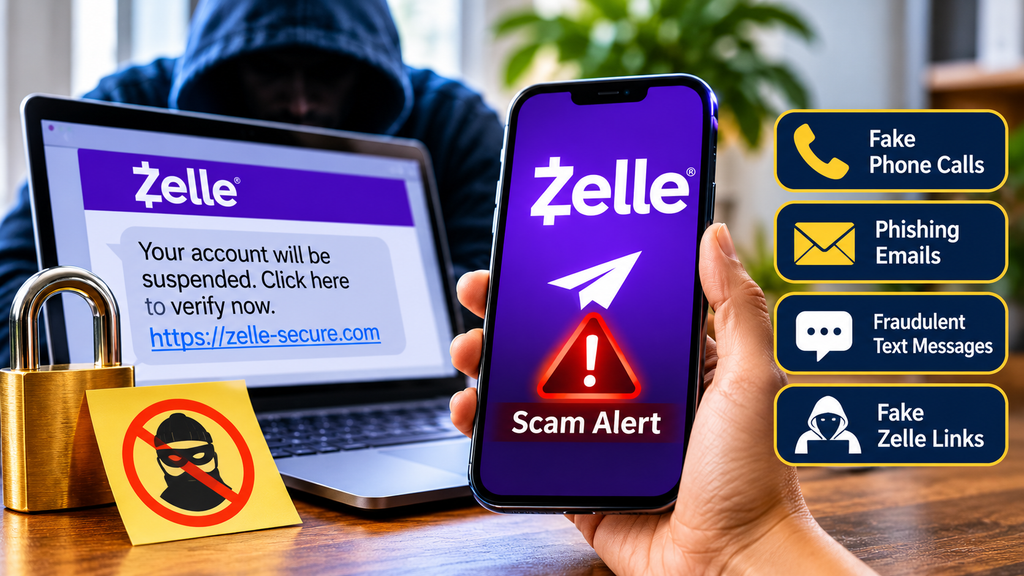
A payment request may be fraudulent when :
- Someone pressures you to act immediately.
- The person says you must keep the transaction secret.
- You are asked to send money to protect your account.
- The recipient is unknown or cannot be verified.
- The price is much lower than normal.
- Someone refuses to meet or provide reliable documentation.
- You are asked to share a verification code.
- A caller threatens account closure or legal action.
- The request comes from a new phone number or social media account.
- You are told not to contact your bank.
Urgency is one of the most common tools used by scammers. If you feel pressured, pause the transaction.
How to Avoid Zelle Scams
Send Money Only to People You Know
Use Zelle primarily with people you know and trust. Be cautious when sending money to someone you have never met or whose identity you have not independently confirmed.
Verify the Recipient
Before approving a payment, review the recipient’s name, phone number, and email address. A small difference in contact information can send the money to the wrong person.
Confirm Unexpected Requests
If a family member or friend asks for money unexpectedly, contact them using a different communication method.
If a bank employee calls, hang up and contact the bank directly.
Never Share Verification Codes
One-time codes can be used to approve transactions or access accounts. Never share these codes with an unexpected caller or message sender.
Avoid Payments for Unverified Purchases
Be careful when a seller refuses safer payment methods or insists on receiving money through Zelle. A low price is not worth losing the entire payment .
Use Account Alerts
Enable notifications for payments, transfers, and login attempts. Alerts can help you notice unusual activity as soon as possible.
What to Do If You Sent Money to a Scammer
If you believe you sent money to a scammer, act quickly.
Contact Your Bank
Call your bank through the official number on your debit card or banking app. Explain that the payment may have been fraudulent and ask what options are available.
Report the Transaction
Provide the bank with the recipient information, transaction date, amount, messages, and any other evidence.
Secure Your Account
Change your banking password and review recent activity. If you shared personal information or a verification code, ask your bank whether additional security measures are necessary.
Save All Evidence
Keep:
- Text messages.
- Emails.
- Phone numbers.
- Usernames.
- Payment confirmations.
- Screenshots.
- Advertisements.
- Names used by the scammer.
You can also review the Federal Trade Commission’s information about scams and unwanted messages and report certain types of online fraud through the Internet Crime Complaint Center .
A Note From Paul Xavier
“Digital payments are useful, but convenience should never replace verification. If someone creates urgency, asks you to move money, or tells you not to contact your bank, stop and investigate independently. A short pause can protect your savings from a decision made under pressure.”
Paul Xavier, Xavier Capital
Frequently Asked Questions
Is Zelle safe to use?
Zelle can be useful when sending money to people you know and trust. The greatest risk usually comes from sending money to an unknown person or following instructions from a scammer.
Can a bank employee ask me to send money through Zelle?
You should be suspicious if someone claiming to work for your bank tells you to send money to another account for protection. End the conversation and contact your bank independently.
Can I get my money back after a Zelle scam?
Recovery depends on the circumstances, the bank, the type of transaction, and how quickly the fraud is reported. Contact your bank immediately and provide all available evidence.
Should I send money to receive a refund?
No. Be cautious if someone says you must send money first to receive a refund. Verify the situation through the company’s official website or customer service channel.
What if a family member asks for money from a new phone number?
Contact that person through a phone number or communication method you already trust. Do not rely only on the new message.
Is it safe to use Zelle to pay an online seller?
You should be very careful. Only send money when you know and trust the recipient. A stranger’s promise, screenshot, or fake invoice is not proof that the transaction is safe.
What should I do if I clicked a suspicious link?
Do not enter additional information. If you entered a password or banking details, contact your bank, change your passwords, and monitor your accounts for suspicious activity.
Banking Scams Guide
- Common Banking Scams in the United States and How to Avoid Them
- Bank Impersonation Scams: How Fake Bank Employees Trick Victims
- Bank Phishing and Fake Check Scams: How to Protect Your Money
Final Thoughts
Zelle scams often succeed because criminals create urgency and make their requests appear trustworthy. They may pretend to be bank employees, relatives, sellers, landlords, or business partners.
Before sending money, stop and verify the recipient independently. Never share passwords or verification codes, and never move money because an unexpected caller tells you that your account is in danger.
When a payment cannot easily be reversed, caution is more important than speed .
Share this guide with someone who regularly uses digital payments. Knowing the warning signs can help prevent a costly mistake.